grey gardens (1975)
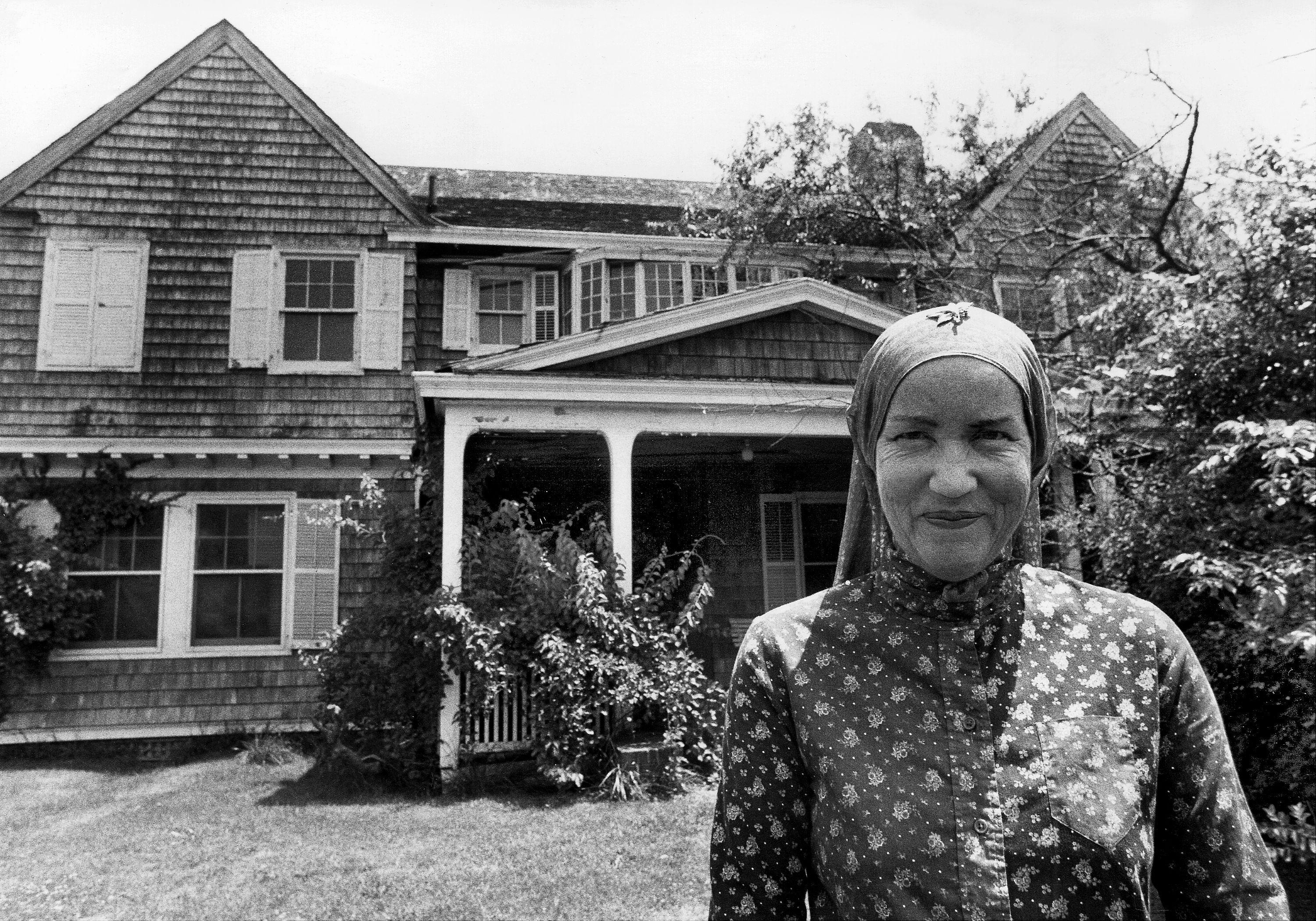
Family is a curious and damning thing. It serves as the operatic backdrop enveloping the two pairs that inhabit the stately decaying titular house. Much like the house they live in, we find the relationship between Edith and Edie already decayed beyond repair. They surround themself with filth and destruction and hurl familiar insults at one another throughout the runtime of this film. The word ‘familiar’ deriving from the Latin ‘familia’, as their words cut as deep as only a family member that has taken up a vast majority of your life can do. Before disentangling the fraught relationship of that duo, it’s worth commenting on the exemplary display of talent from the other duo that occupied the house during this time.
The Maysles are firing on all cylinders in an acutely subtle way. To be so present but feel like they’re not interfering is an immense skill. To capture everything with the technical limits we’ve spoken about in class is mind-boggling to me. Even after the immense feat of being so acutely aware of what to capture & when, it’s incredibly difficult to edit this into a cohesive film when the majority of the screen time is just two women continually talking over one another. Hence why the editors rightfully deserved a director’s credit.
Moving on to the on-screen drama of Edith and Edie, I couldn’t help but think of Bergman’s ‘Autumn Sonata’ come to life. We find here, a previously famous and talented mother in the world of music, who holds a tight and malignant grip on her daughter. There are a couple of uninterrupted takes of Big Edith being incredulously mean to her own daughter when attempting to sing. I have absolutely no musical bone in my body so I’m not equipped to judge her technical ability, but it felt as if it would fit in Chazelle’s ‘Whiplash.’ In another scene, little Edie speaks of her aspirations for her career and how she had to crawl back to Grey Gardens to take care of her mother. From big Edie’s previous behaviour, it’s entirely believable that she could have this control over her daughter, but the fact that little Edie returns is the thing most interesting to me.
Family is a great and wondrous thing when it’s cohesive, but feels like a blood-bound contract when it curdles. That feeling of being indebted to someone even if they treat you not particularly well is a thing I think we can all relate to on some level. So with big Edith being who she is, I have no doubt in my mind that little Edie could be drawn back to Grey Gardens, but in the film, she starts to cite this as the reasoning for her broadway career disintegrating. Pairing this with her mother’s insistence we start to ponder that perhaps she wasn’t good enough for broadway and used her mother’s operation as a scapegoat to retreat back to Grey Gardens. Or perhaps not. That’s the push and pull that is constantly boiling under the surface of every rambling incoherent conversation the two have. There is disdain in preparing liver on crackers, but also a dull love. That is the magic of the Maysles’ ‘Grey Gardens’ that will draw me back again and again.
Comments
Post a Comment